
Table of contents
- What Is Marine Plywood Density?
- Why Density Matters in Marine Applications
- Marine Plywood Strength and Density Chart
- How Density Influences Strength and Workability
- Mechanical Strength in Real-World Use
- How Manufacturing Quality Affects Strength
- Choosing the Right Marine Plywood for Your Project
- Why CHANTA’s Okoume Marine Plywood Is the Ideal Choice
- Conclusion: Balance Strength with Weight
- Contact CHANTA for Technical Support
When choosing plywood for marine or outdoor construction, understanding its **density and strength** is essential. These two properties determine how a board performs under weight, moisture, and mechanical stress. In this article, we’ll explain what marine plywood density means, how it affects performance, and share a strength chart comparing common species such as Okoume, Birch, and Hardwood plywoods — including insights from CHANTA’s Okoume marine plywood.
What Is Marine Plywood Density?
Density is the measure of mass per unit volume (usually kg/m³). In plywood, it reflects both the type of wood used and how tightly the veneers are bonded. A higher density generally indicates greater stiffness and impact resistance, while lower density provides lighter weight and easier handling. For marine-grade plywood, balance is key — it must be strong yet light enough for boats and outdoor structures.
The density of marine plywood typically ranges between **430 kg/m³ and 750 kg/m³**, depending on the wood species and adhesive used.
Why Density Matters in Marine Applications
In boatbuilding and outdoor furniture, weight directly affects performance and usability. Lightweight panels are easier to handle, install, and move, while heavier panels offer higher structural rigidity. Here’s why density is important:
- Stability: Higher density plywood resists bending and warping under stress.
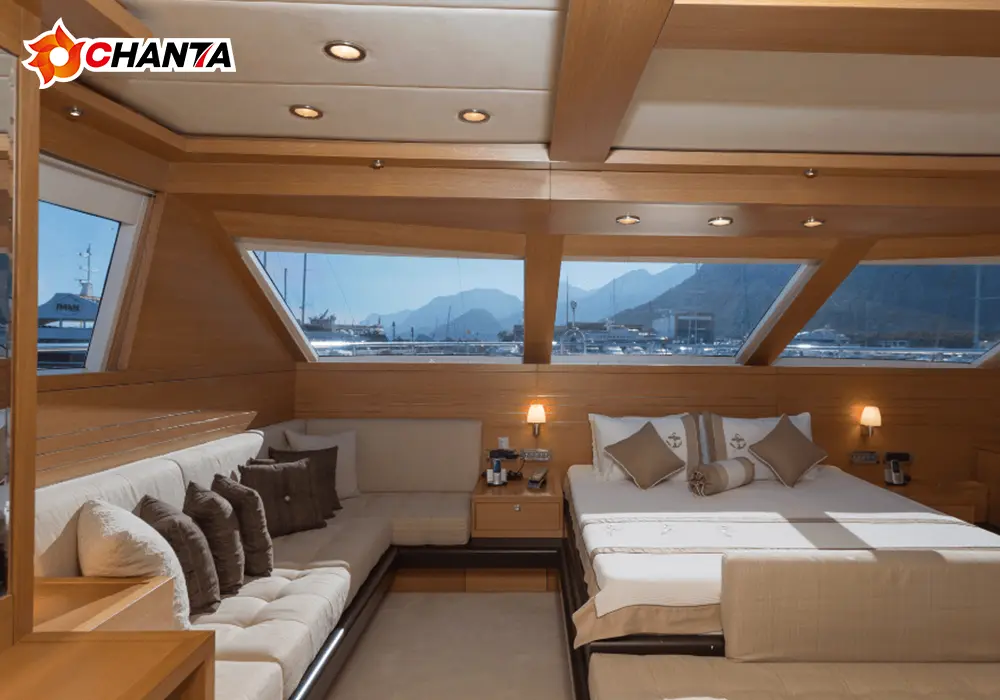
- Weight Management: Lower density plywood like Okoume reduces total structure weight — crucial for boats and movable furniture.
- Durability: Properly manufactured medium-density plywood balances impact resistance with manageable weight.
- Moisture Performance: Density also affects how the board absorbs or resists water penetration over time.
Marine Plywood Strength and Density Chart
The table below summarizes the average density and mechanical strength values of common marine plywood types used worldwide. Data are compiled from manufacturer standards, BS1088 guidelines, and CHANTA’s in-house testing.
| Plywood Type | Average Density (kg/m³) | Bending Strength (MPa) | Modulus of Elasticity (GPa) | Typical Application |
|---|---|---|---|---|
| Okoume Marine Plywood | 430 – 480 | 60 – 75 | 6.0 – 7.5 | Boats, interiors, furniture, van panels |
| Birch Marine Plywood | 650 – 700 | 80 – 95 | 10.0 – 12.5 | Truck flooring, heavy-duty formwork |
| Hardwood Marine Plywood (Mixed Core) | 550 – 600 | 70 – 85 | 8.0 – 9.5 | Construction, outdoor furniture, partitions |
| Eucalyptus Marine Plywood | 580 – 620 | 75 – 90 | 8.5 – 10.0 | Formwork, industrial use |
As seen above, Okoume marine plywood is the lightest option while maintaining excellent structural strength. This makes it the preferred choice for applications where both performance and reduced weight are critical — especially in marine interiors and decorative furniture.
How Density Influences Strength and Workability
Although density correlates with strength, it also affects how plywood behaves during processing and installation:
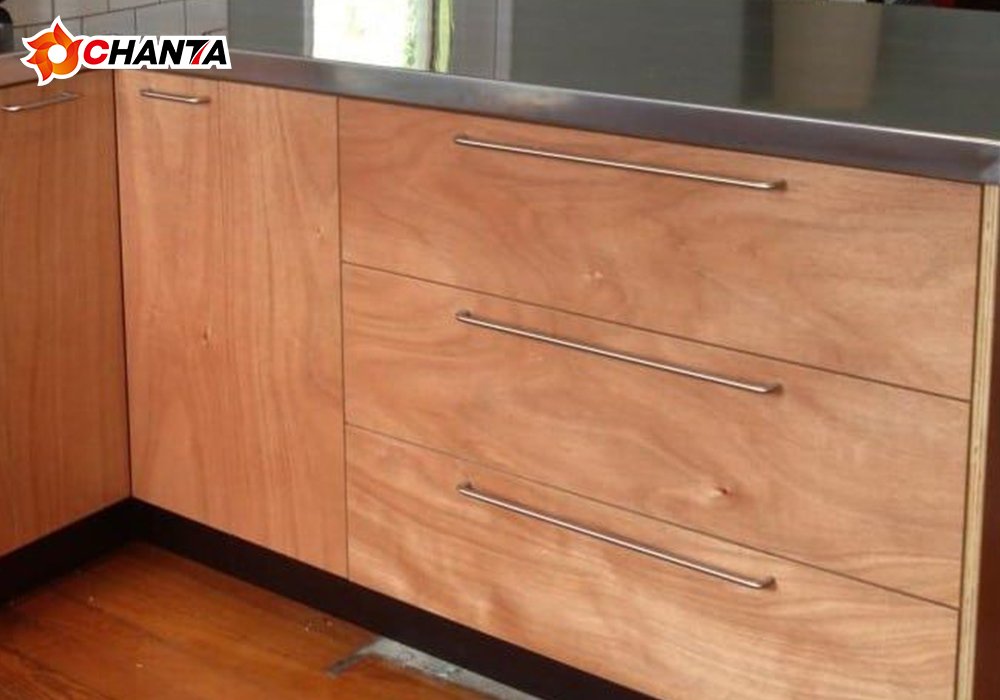
- Light-density panels (Okoume) are easy to cut, bend, and handle. They are ideal for curved boat panels or custom furniture.
- Medium-density panels (Hardwood) provide a balance between flexibility and stiffness — suitable for general construction.
- High-density panels (Birch) are extremely rigid but heavier and harder to work with; best for industrial flooring or heavy-duty structures.
Mechanical Strength in Real-World Use
The mechanical properties of marine plywood determine how it behaves under stress:
- Bending Strength (MOR): The plywood’s resistance to breaking under load. Higher values indicate stronger panels.
- Modulus of Elasticity (MOE): Measures stiffness — how much the panel will flex under stress. The higher the number, the less it bends.
For example, CHANTA’s Okoume marine plywood combines moderate bending strength (60–75 MPa) with excellent flexibility, making it ideal for curved boat hulls and indoor paneling where weight reduction matters.
How Manufacturing Quality Affects Strength
Not all marine plywood is created equal. Even with the same density, poor manufacturing can lead to weak bonding or internal voids. Genuine marine-grade panels — like those from CHANTA — use **WBP phenolic resin**, precision-calibrated veneer thickness, and hot-press processes to ensure consistent strength and long-term durability.
Choosing the Right Marine Plywood for Your Project
Here’s a simple guide for selecting the correct density and strength level:
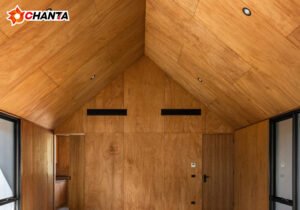
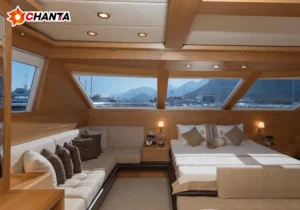
- Light-duty & decorative projects: Choose Okoume (lightweight, smooth, easy to handle).
- Medium-duty construction: Use hardwood or eucalyptus core for a balance of rigidity and price.
- Heavy-duty applications: Go for birch or mixed hardwood panels for superior stiffness and load capacity.
Why CHANTA’s Okoume Marine Plywood Is the Ideal Choice
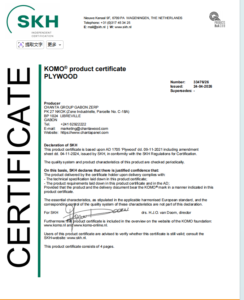
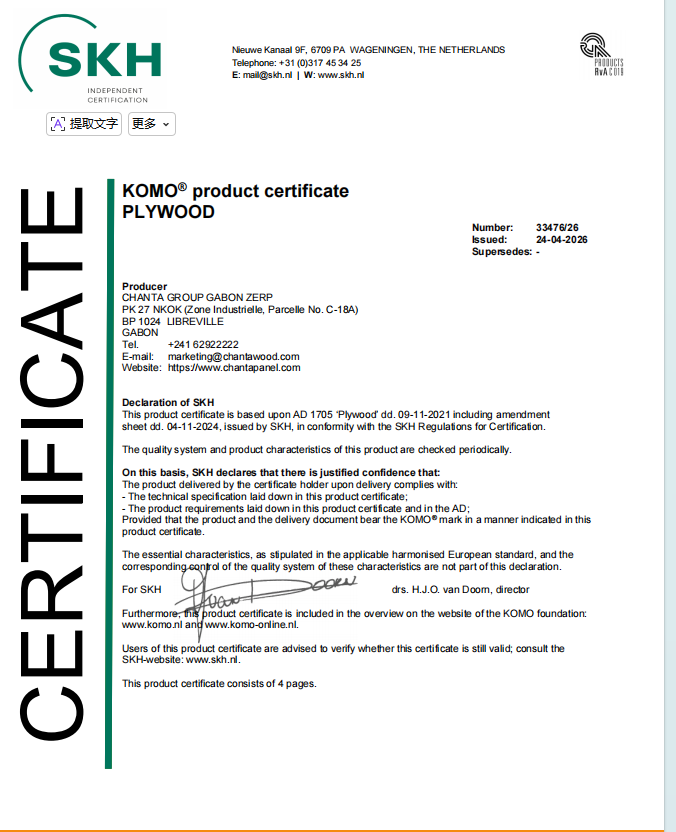
CHANTA integrates raw material sourcing in Gabon with advanced production in Vietnam, delivering globally certified BS1088 Okoume marine plywood. Each panel undergoes rigorous testing for density, bonding, and moisture resistance, ensuring reliable performance across all applications.
- FSC and CARB certified materials
- WBP phenolic glue for waterproof durability
- Thicknesses from 6mm to 25mm available
- Lightweight yet strong — perfect for boats and interiors
Conclusion: Balance Strength with Weight
Understanding marine plywood density and strength helps you make smarter material decisions. While high-density plywood provides stiffness and load resistance, lightweight Okoume offers flexibility and ease of handling. By choosing a trusted manufacturer like CHANTA, you can achieve the perfect combination of both — durability and performance in every sheet.
Contact CHANTA for Technical Support
Need help selecting the right marine plywood for your next project? Visit CHANTA Okoume Plywood to download technical specifications, view strength data, or request a personalized quotation. Our team is ready to provide expert guidance based on your project’s requirements.