
Table of contents
- Understanding What “Waterproof” Really Means
- What Makes Marine Plywood Resistant to Water?
- Why Standard Plywood Performs Differently
- How Gabon Marine Plywood Handles Moisture
- Common Applications Where Moisture Resistance Matters
- Can Marine Plywood Be Used Outdoors?
- How to Identify Truly High-Quality Marine Plywood
- Common Misunderstandings About Waterproof Plywood
- Why Builders Continue Choosing Marine Plywood
- Final Thoughts
One of the most common questions buyers ask when sourcing marine plywood is whether it is truly waterproof. The term itself often creates the impression that marine plywood can withstand unlimited exposure to water without any risk of damage. However, the reality is more complex, and understanding the difference between waterproof performance and water resistance is essential for making informed purchasing decisions.
Builders, furniture manufacturers, boat makers, and construction companies all rely on marine plywood for projects exposed to moisture or humid environments. Yet many buyers still misunderstand how marine plywood actually performs under real conditions and what factors determine its durability over time.
Understanding What “Waterproof” Really Means
Waterproof Does Not Mean Indestructible
When people hear the word waterproof, they often assume the material cannot absorb water or become damaged under any circumstances. In practice, no plywood is completely immune to environmental conditions forever. Even high-quality marine plywood requires proper installation, sealing, and maintenance to achieve long-term performance.
The key difference is that marine plywood is specifically engineered to resist moisture far better than standard plywood products. It uses stronger adhesives, higher-quality veneers, and more stable core structures designed to handle humid or wet environments.
Water Resistance vs Water Exposure
Another important distinction is the difference between temporary water exposure and continuous water immersion. Marine plywood is designed to maintain structural stability under repeated moisture exposure, but this does not mean it should remain permanently submerged without protection.
In marine and outdoor applications, builders typically apply coatings, sealants, or fiberglass layers to improve long-term durability and surface protection.
What Makes Marine Plywood Resistant to Water?
WBP and Phenolic Glue Systems
One of the main reasons marine plywood performs better in wet environments is the adhesive system used during production. High-quality panels use WBP (Water Boil Proof) or phenolic glue, which maintains bonding strength even when exposed to moisture and heat.
These waterproof adhesives prevent veneer layers from separating, reducing the risk of delamination — one of the most common problems found in lower-quality plywood products.
High-Quality Veneers and Core Structure
The internal structure of plywood also plays a major role in moisture resistance. Premium products such as Gabon marine plywood often use Okoume veneers with a more uniform density and cleaner structure.
A stable core with minimal gaps or voids reduces the amount of moisture trapped inside the panel, helping improve durability and long-term stability.
Why Standard Plywood Performs Differently
Lower Adhesive Quality
Standard commercial plywood often uses interior-grade adhesives that are not designed for moisture exposure. When these products encounter water, the bonding strength weakens and veneer layers may begin separating over time.
This is one of the main reasons why regular plywood is unsuitable for marine environments or outdoor construction projects.
Inconsistent Core Construction
Lower-grade plywood frequently contains internal gaps, overlaps, or uneven veneers. These defects create weak points where moisture can penetrate more easily, accelerating damage and reducing overall lifespan.
In contrast, properly manufactured marine plywood uses tighter construction standards to improve structural integrity.
How Gabon Marine Plywood Handles Moisture
The Advantage of Okoume Wood
Gabon marine plywood is widely recognized for its use of Okoume wood, a material valued for its lightweight structure and stable performance. Okoume veneers provide a more consistent internal composition, which helps improve moisture resistance and processing quality.
This consistency is especially important in marine and humid environments where material stability directly affects long-term performance.
Lightweight but Durable
One reason boat builders prefer Okoume marine plywood is its excellent balance between weight and strength. Reducing weight improves handling and efficiency while maintaining enough structural durability for demanding applications.
When combined with waterproof adhesive systems, Okoume plywood performs reliably in environments where ordinary plywood would quickly fail.
Common Applications Where Moisture Resistance Matters
| Application | Why Marine Plywood Is Used |
|---|---|
| Boat Building | Handles humid and wet conditions more effectively |
| Bathroom Furniture | Improved resistance to moisture exposure |
| Outdoor Construction | Better durability in changing weather conditions |
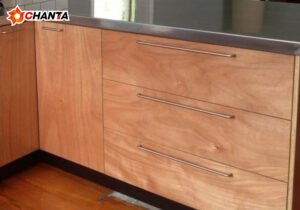
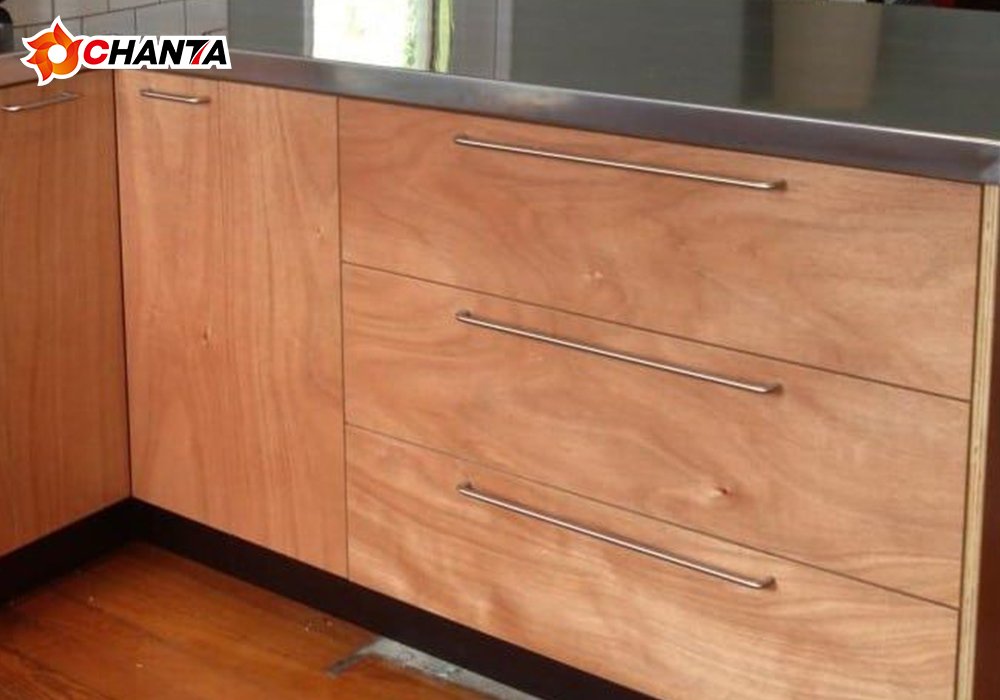
| Kitchen Cabinets | Reduced risk of swelling and deformation |
| Interior Decoration | Stable structure in humid climates |
Can Marine Plywood Be Used Outdoors?
Yes, but Protection Is Still Important
Many buyers assume that because marine plywood is moisture resistant, it does not require additional protection outdoors. In reality, proper sealing and finishing significantly improve lifespan and appearance.
Protective coatings help reduce direct moisture penetration, UV exposure, and surface wear. This is especially important in regions with heavy rainfall or strong sunlight.
Environmental Conditions Matter
Outdoor performance depends heavily on environmental conditions and installation quality. Even high-quality Gabon marine plywood performs better when properly maintained and protected.
How to Identify Truly High-Quality Marine Plywood
Check the Glue Type
Always confirm that the plywood uses WBP or phenolic adhesive systems. This is one of the most important indicators of moisture resistance.
Inspect the Core Structure
Examine the edges of the plywood for visible gaps or inconsistent layers. A uniform core structure usually indicates better manufacturing quality.
Review Certifications
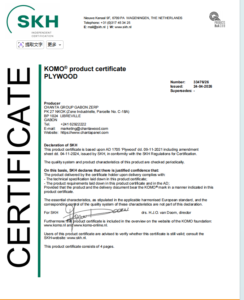
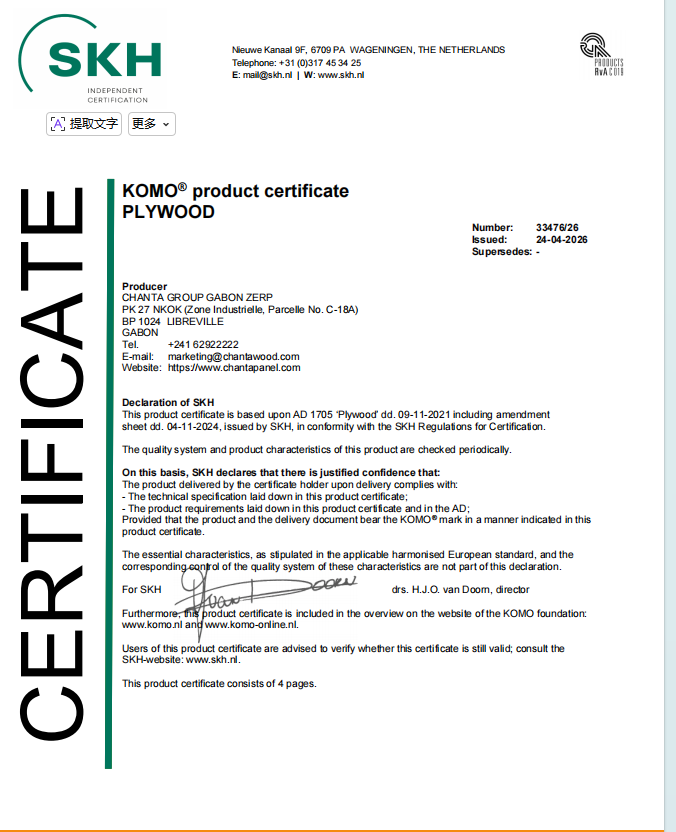
Certifications such as BS1088, FSC, CE, CARB, and EPA can help verify quality standards and compliance requirements.
Common Misunderstandings About Waterproof Plywood
“Marine Plywood Can Never Be Damaged by Water”
No plywood is completely maintenance-free. Continuous exposure without protection can eventually affect even premium products.
“All Waterproof Plywood Is Marine Grade”
Some products are marketed as waterproof but do not meet true marine-grade standards. Buyers should always evaluate adhesive quality, certifications, and core construction before purchasing.
“Thickness Alone Determines Water Resistance”
While thickness affects strength and durability, moisture resistance depends more on glue systems and manufacturing quality.
Why Builders Continue Choosing Marine Plywood
Long-Term Durability
Compared to standard plywood, properly manufactured marine plywood offers significantly better resistance to moisture-related damage.
Reliable Structural Stability
Stable core construction reduces warping, swelling, and delamination under changing environmental conditions.
Versatile Applications
From furniture manufacturing to boat construction, marine plywood provides flexibility across a wide range of industries.
Final Thoughts
So, is marine plywood really waterproof? The answer is that it is specifically designed to resist moisture far better than standard plywood, but long-term performance still depends on proper manufacturing quality, installation, and protection.
For buyers looking for reliable performance in humid or outdoor environments, Gabon marine plywood remains one of the most trusted solutions due to its stable Okoume core, strong adhesive systems, and export-grade manufacturing standards.