
Table of contents
When selecting materials for furniture, cabinetry, interior decoration, or construction projects, buyers often compare two popular options: marine plywood and MDF. At first glance, both materials appear suitable for similar applications. They are available in multiple thicknesses, can be cut into various shapes, and are widely used throughout the woodworking industry.
However, once performance, durability, moisture resistance, and long-term value enter the discussion, significant differences begin to emerge. Understanding these differences helps builders, furniture manufacturers, and importers choose the right material based on project requirements rather than price alone.
What Is Marine Plywood?
Built for Strength and Moisture Resistance
Marine plywood is a high-performance plywood manufactured using multiple layers of veneer bonded together with waterproof adhesive systems such as WBP or phenolic glue. The cross-grain construction improves structural stability while reducing warping and deformation.
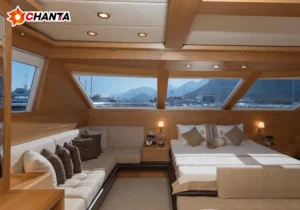
High-quality products such as Gabon marine plywood often use Okoume veneers, providing a combination of lightweight performance, strength, and excellent workability. Because of its durable structure, marine plywood is commonly used in furniture production, marine construction, flooring, and architectural projects.
What Is MDF?
Engineered Wood with a Smooth Surface
MDF, or Medium Density Fiberboard, is manufactured by compressing wood fibers together with resin and wax under high pressure. Unlike plywood, MDF does not contain veneer layers. Instead, it has a uniform internal composition that creates a very smooth and consistent surface.
This smooth finish makes MDF popular in painted furniture, decorative panels, and interior applications where appearance is more important than structural performance.
The Biggest Difference: Internal Structure
Marine Plywood Uses Veneer Layers
The strength of marine plywood comes from its layered construction. Each veneer layer runs in a different direction, distributing stress more evenly across the panel. This design significantly improves load-bearing capacity and structural stability.
As a result, marine plywood can withstand greater mechanical stress and remains stable even under changing environmental conditions.
MDF Uses Compressed Fibers
MDF has a homogeneous structure, meaning it looks the same throughout the panel. While this provides excellent surface consistency, it does not offer the same strength as layered plywood.
Heavy loads or repeated stress may cause MDF to sag, crack, or lose structural integrity over time.
Moisture Resistance Comparison
Marine Plywood Performs Better in Humid Environments
One of the biggest advantages of marine plywood is its moisture resistance. Waterproof adhesive systems and high-quality veneers help prevent delamination and swelling when exposed to humidity.
This is why marine plywood remains a preferred choice for kitchens, bathrooms, coastal construction projects, and marine applications.
MDF Has Limited Moisture Resistance
Standard MDF absorbs moisture relatively quickly. Once water penetrates the surface, the board can swell and permanently lose its shape.
Although moisture-resistant MDF products exist, they still cannot match the durability of properly manufactured marine plywood in demanding environments.
Strength and Load Capacity
Marine Plywood Offers Superior Structural Performance
Builders frequently choose marine plywood because it provides excellent strength-to-weight performance. The layered veneer structure allows it to support heavier loads while maintaining dimensional stability.
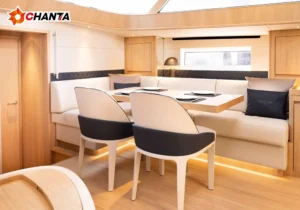
Applications such as flooring, cabinetry, boat interiors, and furniture frames often benefit from the structural advantages of plywood.
MDF Is Better for Non-Structural Applications
MDF performs well in decorative applications but struggles when significant structural strength is required. Heavy shelving or large furniture components made from MDF may require additional reinforcement to prevent bending.
Surface Finish and Appearance
MDF Wins in Surface Smoothness
One area where MDF excels is surface consistency. Because the material is manufactured from compressed fibers, it has a perfectly smooth surface that is ideal for painting and decorative finishes.
For projects requiring a flawless painted appearance, MDF often provides excellent results.
Marine Plywood Offers Natural Wood Character
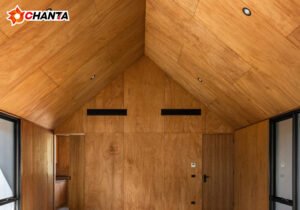
High-quality Okoume plywood provides a natural wood grain appearance that many furniture manufacturers prefer. The attractive veneer surface can be stained, laminated, or finished to achieve premium visual results.
Weight Comparison
Okoume Marine Plywood Is Lightweight
One reason global buyers prefer Gabon marine plywood is its lightweight structure. Okoume wood offers excellent strength while reducing overall panel weight.
This makes transportation, installation, and processing more efficient, particularly in large-scale projects.
MDF Is Significantly Heavier
MDF generally weighs more than marine plywood of the same thickness. The increased density may improve stability in some applications but also increases handling and transportation costs.
Marine Plywood vs MDF Comparison Table
| Feature | Marine Plywood | MDF |
|---|---|---|
| Moisture Resistance | Excellent | Limited |
| Structural Strength | High | Medium |
| Weight | Lightweight | Heavy |
| Surface Smoothness | Good | Excellent |
| Screw Holding Capacity | Strong | Moderate |
| Outdoor Use | Suitable | Not Recommended |
| Durability | Long Lifespan | Moderate |
Which Material Should You Choose?
Choose Marine Plywood If:
You need moisture resistance, structural strength, durability, and long-term performance. Marine plywood is often the better choice for furniture manufacturing, kitchens, bathrooms, flooring, and outdoor applications.
Choose MDF If:
Your project focuses primarily on painted decorative surfaces and operates in dry indoor environments. MDF can provide excellent visual consistency at a lower material cost.
Final Thoughts
The debate between marine plywood and MDF is not about which material is universally better. It is about selecting the right material for the intended application.
For projects requiring durability, moisture resistance, and structural reliability, Gabon marine plywood offers significant advantages. For decorative interior applications where surface smoothness is the top priority, MDF remains a practical option.
Understanding these differences allows buyers to make smarter purchasing decisions and achieve better long-term results.