
Table of contents
- Why Quality Identification Matters
- Key Factors That Define High-Quality Marine Plywood
- How to Physically Inspect Marine Plywood
- Understanding Certifications and Standards
- Comparing High-Quality vs Low-Quality Plywood
- Common Signs of Poor Quality
- Why Gabon Marine Plywood Is Often Preferred
- Tips for Buyers Before Making a Purchase
- Final Thoughts
For buyers sourcing marine plywood, one of the biggest challenges is determining whether a product truly meets quality expectations. Many plywood sheets look similar at first glance, but their internal structure, bonding strength, and long-term performance can vary significantly.
Choosing the wrong material can lead to serious problems, including delamination, structural weakness, and increased costs. That is why understanding how to identify high-quality plywood is essential, especially when working with Gabon marine plywood or other export-grade products.
Why Quality Identification Matters
Preventing Project Failures
Low-quality plywood may perform adequately at the beginning, but problems often appear over time. Warping, cracking, or bonding failure can compromise the integrity of a project.
By identifying high-quality materials early, buyers can avoid these risks and ensure long-term durability.
Protecting Investment
Plywood is often used in large quantities. Even small quality differences can have a significant financial impact when multiplied across an entire project.
Selecting reliable materials helps reduce waste, rework, and unexpected costs.
Key Factors That Define High-Quality Marine Plywood
Core Structure and Internal Consistency
The core of plywood determines its strength and stability. High-quality marine plywood uses evenly layered veneers with minimal gaps or overlaps.
Gabon marine plywood, especially when made from Okoume, often provides a more uniform core structure. This consistency reduces weak points and improves overall performance.
Adhesive Strength and Bonding
Glue quality is critical in marine plywood. WBP (water boil proof) or phenolic adhesives ensure that layers remain bonded even under moisture exposure.
Poor bonding can lead to delamination, which is one of the most common causes of plywood failure.
Surface Quality
A smooth and clean surface indicates better manufacturing control. High-quality plywood requires less sanding and preparation before finishing.
This not only improves appearance but also reduces labor costs in production.
Thickness Accuracy
Consistent thickness across the panel ensures proper fitting and structural stability. Variations in thickness can cause alignment issues during installation.
How to Physically Inspect Marine Plywood
Check the Edges
The edges of the plywood reveal the internal structure. Look for evenly stacked layers without visible gaps or voids.
Irregular layering is a sign of poor manufacturing quality.
Examine the Surface
Inspect the face of the panel for defects such as cracks, knots, or uneven texture. High-quality marine plywood should have a consistent and smooth surface.
Test the Weight
Weight can indicate the type of material used. Gabon marine plywood made from Okoume is typically lighter while still maintaining strength.
Extremely heavy panels may indicate dense but less workable materials.
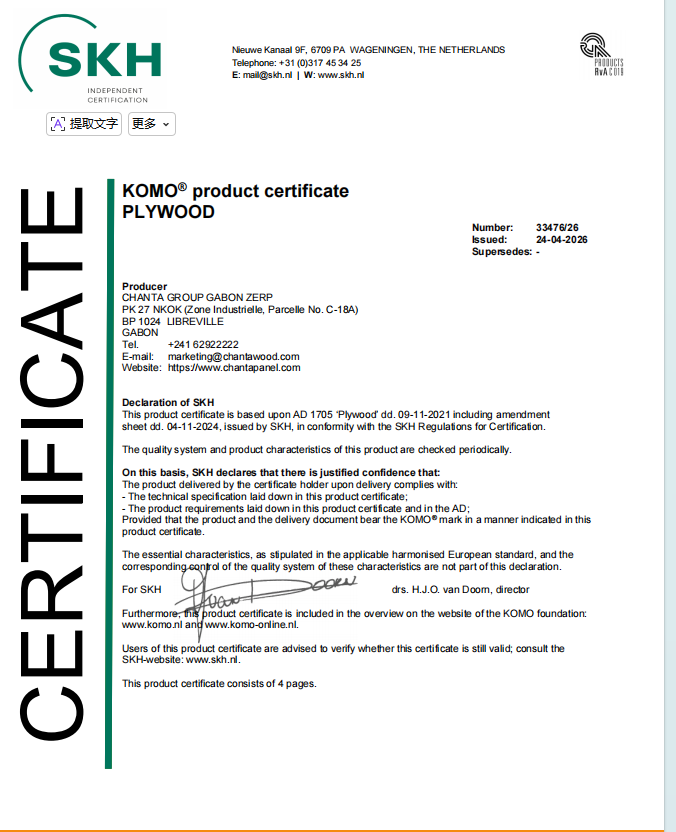
Understanding Certifications and Standards
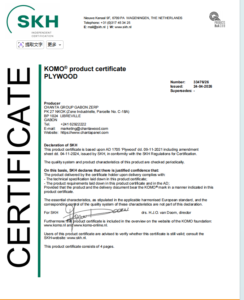
BS1088 Marine Standard
This standard ensures that plywood meets specific requirements for marine use, including veneer quality and bonding strength.
FSC Certification
FSC confirms that the wood comes from responsibly managed forests, which is important for sustainability.
CARB and EPA Standards
These certifications ensure low formaldehyde emissions, making the plywood safer for indoor use.
Comparing High-Quality vs Low-Quality Plywood
| Feature | High-Quality Marine Plywood | Low-Quality Plywood |
|---|---|---|
| Core Structure | Uniform, void-free | Irregular, gaps present |
| Adhesive | WBP / Phenolic | Weak bonding |
| Surface | Smooth, clean | Rough, uneven |
| Thickness | Consistent | Variable |
| Durability | Long-lasting | Prone to failure |
Common Signs of Poor Quality
Visible Core Gaps
Gaps inside the panel weaken the structure and reduce load capacity.
Delamination
If layers begin to separate, it indicates poor adhesive quality.
Uneven Surface
Surface defects can affect finishing and overall appearance.
Why Gabon Marine Plywood Is Often Preferred
Consistent Raw Material
Okoume wood provides uniform density and fewer defects.
Reliable Production Standards
Export-oriented factories maintain strict quality control processes.
Balanced Performance
Gabon marine plywood offers a combination of strength, light weight, and workability.
Tips for Buyers Before Making a Purchase
Request Samples
Always evaluate physical samples before placing large orders. This helps verify quality under real conditions.
Check Supplier Reputation
Reliable suppliers provide consistent products and transparent documentation.
Review Specifications Carefully
Confirm thickness, glue type, and certification details before finalizing a purchase.
Final Thoughts
Identifying high-quality marine plywood requires attention to detail and a clear understanding of key factors such as core structure, adhesive strength, and surface quality.
For many buyers, Gabon marine plywood provides a dependable option due to its consistent material and production standards. By applying the right evaluation methods, buyers can make more confident decisions and ensure long-term project success.