
Table of contents
- Understanding What “Marine Plywood” Really Means
- Why Gabon Has Become a Key Source of Marine Plywood
- The Real Advantages Buyers Experience
- Common Misunderstandings About Gabon Marine Plywood
- Specifications Buyers Should Pay Attention To
- How to Evaluate a Reliable Supplier
- Why Global Buyers Continue to Choose Gabon Marine Plywood
- Final Thoughts
If you have been sourcing plywood for construction, furniture, or marine projects, you have likely come across Gabon marine plywood. It is often described as high-quality, reliable, and widely used in international markets. But what does that really mean in practice?
Many buyers rely on specifications, certifications, or supplier claims when making purchasing decisions. However, real performance goes beyond product sheets. Understanding the truth behind Gabon marine plywood helps buyers avoid costly mistakes and choose materials that truly match their project needs.
Understanding What “Marine Plywood” Really Means
Not All Marine Plywood Is the Same
One of the biggest misconceptions in the market is that all marine plywood performs equally. In reality, quality varies significantly depending on raw materials, glue type, and manufacturing standards.
Gabon marine plywood often stands out because it uses Okoume veneers and follows stricter export requirements. However, not every product labeled as “marine plywood” meets the same level of performance.
The Importance of Glue and Construction
True marine plywood depends heavily on adhesive quality. WBP (water boil proof) or phenolic glue ensures that layers remain bonded under moisture exposure.
Without proper bonding, even high-quality wood can fail. Buyers should always confirm glue type rather than relying solely on product labels.
Why Gabon Has Become a Key Source of Marine Plywood
Abundant Okoume Resources
Gabon is one of the world’s primary sources of Okoume wood, a material known for its light weight and smooth grain. This gives manufacturers a consistent raw material base.
Compared to mixed hardwood sources, Okoume provides better uniformity, which translates into more predictable performance in finished panels.
Export-Oriented Production
Many factories operating in Gabon focus on international markets. This means production often aligns with standards required in Europe and North America.
For buyers, this results in better documentation, more stable quality, and fewer compliance issues.
The Real Advantages Buyers Experience
Consistency Across Orders
Bulk buyers often struggle with inconsistent quality between shipments. Gabon marine plywood tends to maintain more stable production standards, especially when sourced from experienced factories.
This consistency reduces project delays and improves overall efficiency.
Workability in Manufacturing
Builders and manufacturers value materials that are easy to process. Okoume plywood cuts cleanly, holds screws well, and reduces breakage during handling.
This translates into lower labor costs and smoother production workflows.
Surface Quality for Finishing
Surface finish matters in both furniture and interior applications. Gabon plywood provides a smoother surface, which simplifies painting, laminating, or veneering.
Less preparation work means faster turnaround times and better visual results.
Common Misunderstandings About Gabon Marine Plywood
“It Is Always the Best Option”
While Gabon marine plywood performs well in many situations, it is not automatically the best choice for every project.
For example, extremely heavy structural applications may require denser hardwood plywood. Buyers should match material properties with specific project requirements.
“All Gabon Plywood Has the Same Quality”
Quality still depends on the manufacturer. Even with the same raw material, differences in production processes can affect performance.
Buyers should evaluate suppliers carefully rather than assuming all products are equal.
“Certification Guarantees Everything”
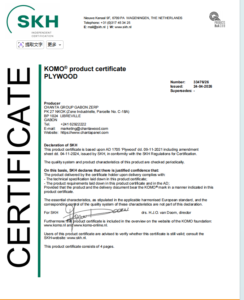
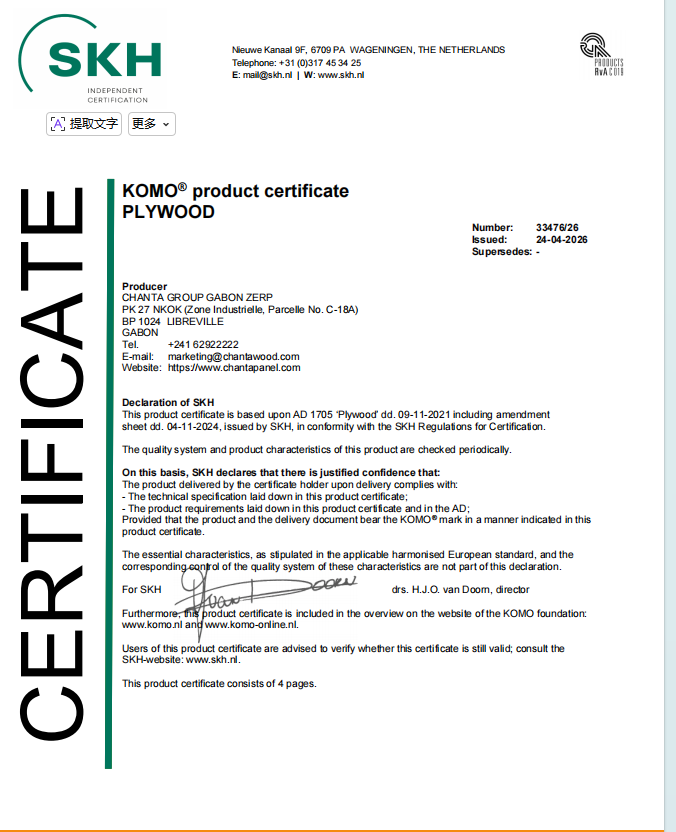
Certifications such as FSC or BS1088 are important, but they do not tell the full story. Real-world performance depends on multiple factors, including production control and material selection.
Specifications Buyers Should Pay Attention To
Standard Sizes and Thickness
Most Gabon marine plywood is available in standard dimensions that fit global markets:
| Specification | Details |
|---|---|
| Size | 1220 x 2440 mm |
| Thickness | 9 mm, 12 mm, 18 mm, 25 mm |
| Core | Okoume or hardwood |
| Glue | WBP / Phenolic |
Application Matching
Choosing the right thickness and structure ensures better results:
- 9–12 mm for interior and furniture
- 15–18 mm for structural use
- 25 mm for heavy-duty applications
How to Evaluate a Reliable Supplier
Look Beyond Price
Low prices can be attractive, but they often come with trade-offs in quality. Experienced buyers focus on long-term value rather than short-term savings.
Check Production Capability
A reliable supplier should maintain stable production capacity and deliver consistent quality across large orders.
Request Samples and Reports
Before placing bulk orders, buyers should request samples and test reports. This helps verify product performance under real conditions.
Why Global Buyers Continue to Choose Gabon Marine Plywood
Balanced Performance
Gabon marine plywood offers a balance between weight, strength, and workability. This makes it suitable for a wide range of applications.
Reliable Supply Chain
With established export channels, buyers can source Gabon plywood more easily than before, ensuring stable delivery timelines.
Compatibility with Global Standards
Products often meet international certifications, allowing smoother entry into regulated markets.
Final Thoughts
The truth about Gabon marine plywood lies in understanding both its strengths and its limitations. It is not just a marketing term, but a material with specific characteristics shaped by raw materials, production methods, and market requirements.
For buyers who take the time to evaluate suppliers, understand specifications, and match materials to applications, Gabon marine plywood can provide consistent performance and long-term value.